
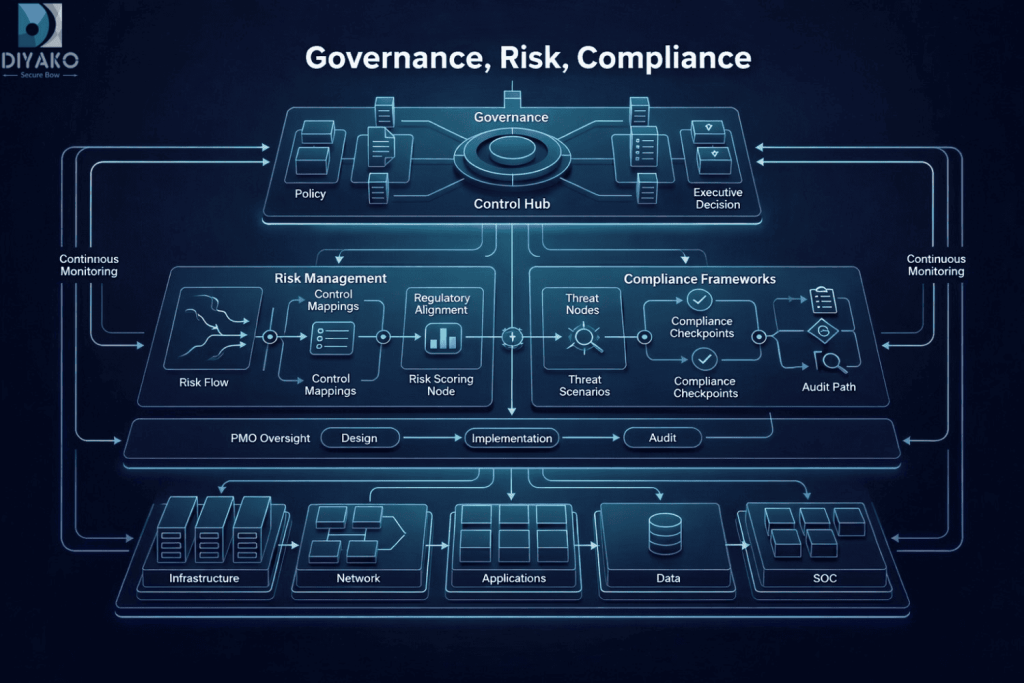
ایجاد شفافیت، اعتماد و امنیت پایدار در سطح راهبردی سازمان. در سازمانهای بالغ، امنیت سایبری نه یک قابلیت صرفاً فنی، بلکه یک سیستم حاکمیتی برای تصمیمسازی و مدیریت ریسک در سطح کسبوکار است.
در فضای پیچیده و پویای امروز، مدیریت امنیت بدون حاکمیت مؤثر، درک دقیق ریسکها و انطباق مستمر با الزامات، عملاً ناکارآمد و ناپایدار خواهد بود. در کمان امن دیاکو (Diyako Secure Bow)، چارچوب حاکمیت، ریسک و انطباق (GRC) بهعنوان لایه حاکمیتی بالادستی، تضمین میکند که امنیت سایبری بهصورت یکپارچه، قابل اندازهگیری و همراستا با اهداف کسبوکار مدیریت شود. این چارچوب، تمامی اجزای معماری امنیت سایبری را هدایت، کنترل و پایش میکند.
در این فاز، ساختار حاکمیتی امنیت سازمان بهصورت یکپارچه، مبتنی بر استانداردها و همراستا با اهداف کسبوکار طراحی میشود.
• ساختار حاکمیت امنیت اطلاعات:
• سیاستها و خطمشیهای امنیتی
• مدل تصمیمگیری و پاسخگویی سازمانی
۱. تحلیل ساختار سازمان و حاکمیت موجود
۲. تدوین سیاستها و چارچوبها
۳. تعریف نقشها و مسئولیتها
۴. طراحی ساختار کمیتههای امنیت
۵. همراستاسازی با اهداف کسبوکار
در این فاز، ریسکهای سازمان بهصورت ساختاریافته شناسایی، تحلیل و مدیریت میشوند تا تصمیمگیریها مبتنی بر واقعیت و اولویتهای کسبوکار باشد.
۱. شناسایی داراییها، ارزشگذاری و سناریوهای تهدید
• شناسایی داراییهای حیاتی
• شناسایی و تحلیل آسیبپذیریها
• مدلسازی تهدید (Threat Modeling)
• تعریف سناریوهای حمله
۲. تحلیل و ارزیابی ریسک
• تحلیل احتمال وقوع و میزان اثر
• در نظر گرفتن زمینه کسبوکار
۳. تعریف سطح پذیرش ریسک
• تعیین سطح پذیرش ریسک
• تعریف آستانه تحمل ریسک
۴. اولویتبندی و برنامهریزی
• رتبهبندی ریسکها
• طراحی برنامههای کاهش ریسک
۵. ایجاد و نگهداری پایگاه ثبت ریسک
• ثبت، بهروزرسانی و پایش مستمر ریسکها
در این فاز، سازمان از نظر انطباق با استانداردها، قوانین و الزامات حاکمیتی ارزیابی و به سطح مطلوب هدایت میشود.
۱. تحلیل شکاف نسبت به استانداردها و چارچوبهای:
• ISO/IEC 27000S
• ISO/IEC 27001
• ISO 31000
• NIST SP 800
• CIS Control v8
• MITRE ATTACK
• COBIT
• TOGAF
• SANS Best Practices
•بهروشها و راهکارهای تولیدکنندگان معتبر امنیتی
۲. تطبیق با الزامات ملی و حاکمیتی:
• شورای عالی فضای مجازی
• مرکز ملی فضای مجازی
• سازمان پدافند غیرعامل
• مرکز مدیریت راهبردی افتای ریاست جمهوری
• مرکز ماهر
• وزارت ارتباطات و فناوری اطلاعات
• پلیس فتا
• حراست کل و سایر مراجع ذیصلاح
در این فاز، کلیه پروژههای مرتبط با امنیت و فناوری اطلاعات سازمان، از مرحله جمعآوری اطلاعات تا طراحی، پیادهسازی، امنسازی و ممیزی، در قالب یک ساختار حاکمیتی و تحت نظارت متمرکز مدیریت میشوند.
۱. استقرار مدل دفتر مدیریت پروژههای امنیت و فناوری در چارچوب حاکمیت سازمان
۲. نظارت بر چرخه کامل پروژهها:
• تحلیل و جمعآوری نیازمندیها
• طراحی معماری
• پیادهسازی و استقرار
• امنسازی و مقاومسازی
• ارزیابی و ممیزی امنیتی
۳. تضمین همراستایی تمامی پروژهها با:
• معماری امنیتی
• الزامات حاکمیت، ریسک و انطباق
• سیاستها و استانداردهای امنیتی سازمان
۴. ایجاد سازوکار نظارت و کنترل داخلی
۵. کنترل کیفیت، ریسک و انطباق در کل چرخه عمر پروژههای امنیتی و فناورانه
• چارچوب حاکمیت امنیت و مستندات سیاستها
• ماتریس نقشها و مسئولیتها
• گزارش ارزیابی ریسک و دفتر ثبت ریسک
• برنامه مدیریت و کاهش ریسک
• نگاشت ریسک به کنترلها
• گزارش تحلیل شکاف و نقشه راه انطباق
• مستندات کنترلها و شواهد اجرایی
• گزارشهای ممیزی و مدیریتی
• داشبوردهای مدیریتی و شاخصهای امنیتی
• مدل بلوغ حاکمیت، ریسک و انطباق
• گزارشهای نظارت بر پروژهها و میزان انطباق
برای ارزیابی وضعیت فعلی و دریافت نقشهراه اختصاصی، با کارشناسان مدیریت ارتباط با مشتریان کمان امن دیاکو در ارتباط باشید.