
Secure continuity of your business

Cybersecurity technical and system audit

Create true transparency into your security posture through in-depth analysis of configurations and controls
Security Technical Audit

Cybersecurity technical system audit

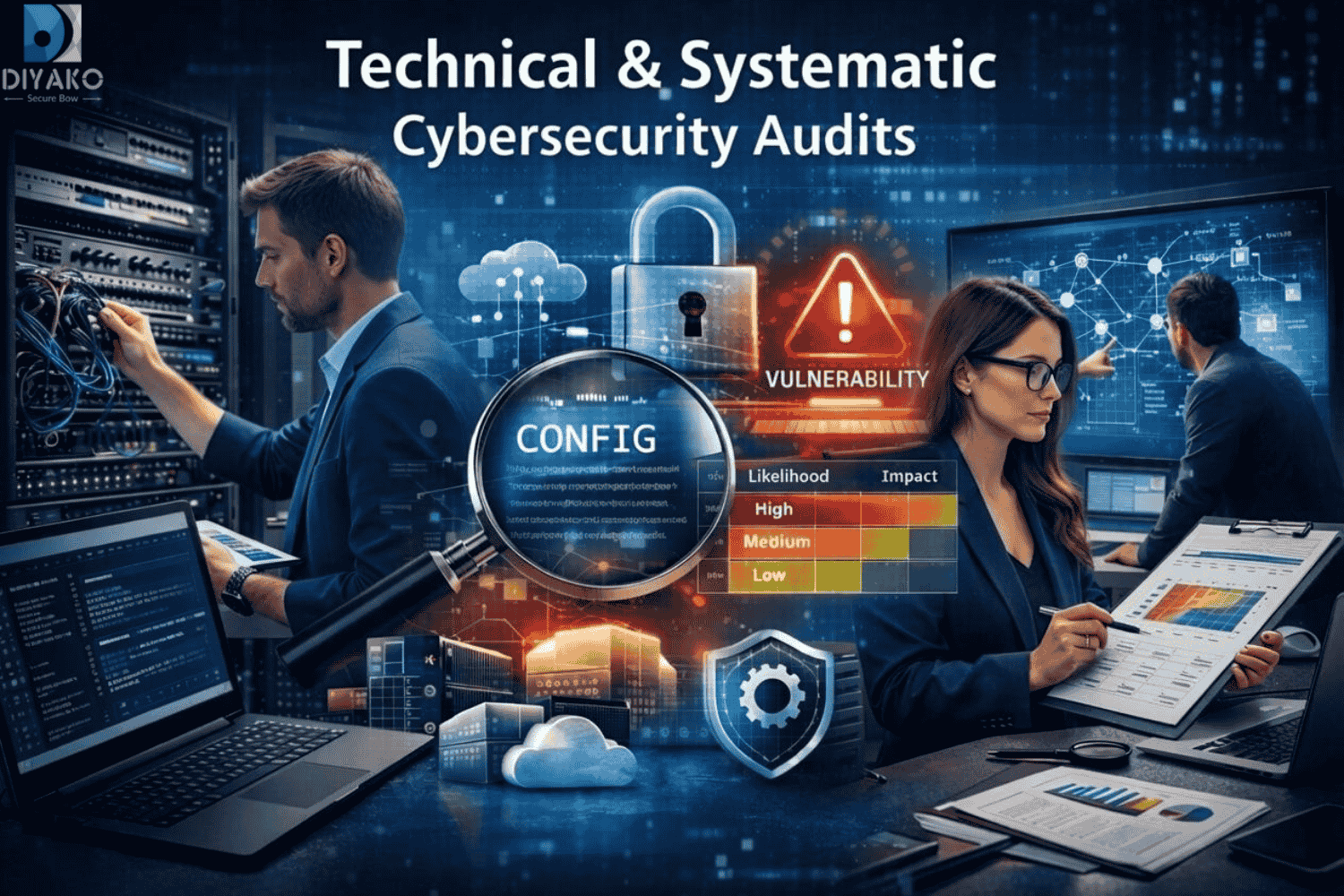
Create true transparency into the security posture through deep analysis of configurations and controls . In today's organizations, numerous tools and solutions have been implemented in the field of cybersecurity; but the lack of detailed visibility into how these tools are configured, integrated, and effective causes a significant portion of security risks to remain hidden in the underlying layers.

In such circumstances, security is no longer a purely equipment issue, but rather becomes a challenge in terms of implementation quality, alignment with standards, and operational efficiency of controls .

At Diaco Safe Arc , a unique and knowledge-based solution for technical and systemic cybersecurity audits is presented as an in-depth, structured assessment based on international methods and in line with the standards and requirements of upstream organizations, so that the organization can obtain an accurate, reliable, and data-driven picture of its real security status and, based on that, make effective and targeted decisions.

Diaco's Safe Bow Approach

In this service, the focus is not simply on identifying problems, but on structural analysis, a deep understanding of the current situation, and providing a path for operational improvement .

Diaco's technical and systems audits can be performed on all components of the security and IT environment, including:

  • Infrastructure
  • Network
  • Systems and systems
  • Applications
  • Software
  • Hardware and equipment

This assessment is carried out at three key levels:

  • Design
  • Configuration
  • Operation

This approach ensures that security gaps are identified not only at the technical level, but also at the architectural and process level.

Key challenges in organizations

Uncertainty about the correct configuration of security equipment and services
Gap between security design and actual implementation in the operational environment
Lack of a unified and reliable view of the status of security controls
Using security tools without evaluating their true effectiveness
Lack of full compliance with governance standards and requirements
Hidden vulnerabilities at the configuration level
Lack of a clear framework for prioritizing corrective actions
Result: Hidden risk + reduced effectiveness of controls + inaccurate decision-making

The process of implementing a technical and system audit

This process is designed to be structured, repeatable, and based on best operational practices, and its output leads directly to operational action and risk reduction.

1. Defining the scope and objectives Audit

At this stage, the audit scope is precisely and documented to maintain focus on critical assets and services.

Activities

• Identify critical assets and services in question

• Determining the scope of the audit (service, system, equipment)

• Defining goals (compliance, increasing security, optimizing controls, etc.)

• Determining the level of audit depth

• Identifying stakeholders and service owners

Output
Audit scope document including objectives, scope and requirements
2. Understanding the environment and audit preparation

At this stage, a detailed understanding of the organization's architecture and current state is created.

Activities

• Analysis of technical and architectural documentation

• Identify the infrastructure structure (on-premises, cloud, or hybrid)

• Review data flow and trust boundaries

• Analysis of existing security tools and controls

• Understanding the organization's operating model

Output
Conceptual environment model and service dependency map
3. Monitoring and assurance Proper implementation of security architecture

This step ensures that the audit is up-to-date, accurate, and based on real threats.

Activities

• Review of current threats and vulnerabilities

• Analysis of common configuration errors

• Compliance with standards and benchmarks

• Audit design and dedicated audit scenarios

Output
Audit scenarios tailored to the organization's environment
4. Implementation Technical audit

The core of this service is performed at this stage.

This audit:

The core of this service is performed at this stage.

• Not based on penetration or destructive testing

• Does not require direct access to systems

• Based on detailed configuration and architecture analysis

Activities

• Holding specialized meetings with service officials

• Detailed review of settings and configurations

• Analysis of the implemented architecture

• Assessing security controls

• Review related operational processes

Output
Initial list of findings at the technical and systems level
5. Analysis and risk assessment

At this stage, findings are transformed into actionable insights.

Activities

• Categorize and analyze findings

• Identify root causes

• Risk assessment based on probability and impact

• Determine the level of importance of each item

• Risk correlation and dependency analysis

Output
Identified risks and prioritization of issues
6. Preparing a report and a roadmap for reform

This step is the main point of differentiation in the quality of the output.

Report content

• Overall security status of the service

• Technical analysis of each finding along with evidence

• Assessing compliance with standards

• Analyze the impact of each risk on the business

The reform roadmap includes

• Corrective actions at the configuration level

• Hardening suggestions

• Modify or improve architecture

• Optimization of processes and policies

• Prioritize actions based on risk

7. Presentation, explanation Presentation, explanation and alignment

The goal of this stage is to convert audit results into operational action.

Activities

• Formal presentation of results to technical and management teams

• Explaining risks and consequences

• Explanation of implementation strategies

• Answering questions and resolving ambiguities

• Alignment to implement corrective actions

If needed:

• Support in implementing reforms

• Conduct a reassessment

Diaco logo

The added value of this service

Diaco's technical and systems audit is not simply a technical assessment, but a management-level decision-making tool that:

Provides a realistic picture of the security status of the organization's critical service
It identifies the gap between the current and desired state of critical service security.
Evaluates the actual effectiveness of security controls
Enables risk-based decision-making
Prevents wasting resources on untargeted investments
Diaco logo

Key outputs

The output of this service is provided in an operational and usable form for technical and management teams:

Analytical report on the security status at the technical and system level of the service
Identifying vulnerabilities at the configuration level
Assessing compliance with standards and requirements
Risk and dependency analysis
Provide accurate and actionable corrective actions
Prioritizing actions based on risk level
Providing an implementation roadmap for improving security

Are you ready to start?

If you need to know:

  • Are your security settings implemented correctly?
  • Which part of your infrastructure is most at risk?
  • Where should security investment be focused?

Diaco Secure Arc Technical and Systems Audit is an accurate, reliable, and actionable starting point for improving your organization's security. Contact Diaco Secure Arc Customer Relationship Management experts to assess your current situation and receive a customized roadmap.

021-91691692 extension 1